


The process of modernization began under the Enlightenment-driven reforms initiated by Pietro Leopoldo, who had made agriculture, based on sharecropping, the central focus of the state’s economic reorganization. This was to be “re-founded” through the long reach of the Accademia dei Georgofili. It all started with an inquiry in 1766, followed in 1770 by the publication Delle case de’ contadini (On the Houses of Farmers), a sort of manual written by the architect of the Grand Ducal Estates, Ferdinando Morozzi. Both Morozzi and the other grand ducal architect, Giuseppe Salvetti (1734–1800), drew on these guidelines in practice, drawing inspiration from the 16th-century legacy of Bernardo Buontalenti.
The Grand Ducal example, starting in the 1760s, was imitated by noble families (such as the Ginori and Pierucci) on their estates. These families, being knowledgeable in agricultural economics and the “arts of design,” copied the initial prototypes and had them built by skilled local craftsmen. As a result, new types of houses were developed, such as those used in the reclamation of the ‘Chiane’ and ‘Maremme’ regions, as well as the so-called Valdarno style, to which almost all the farmhouses in the municipality of Laterina belong.
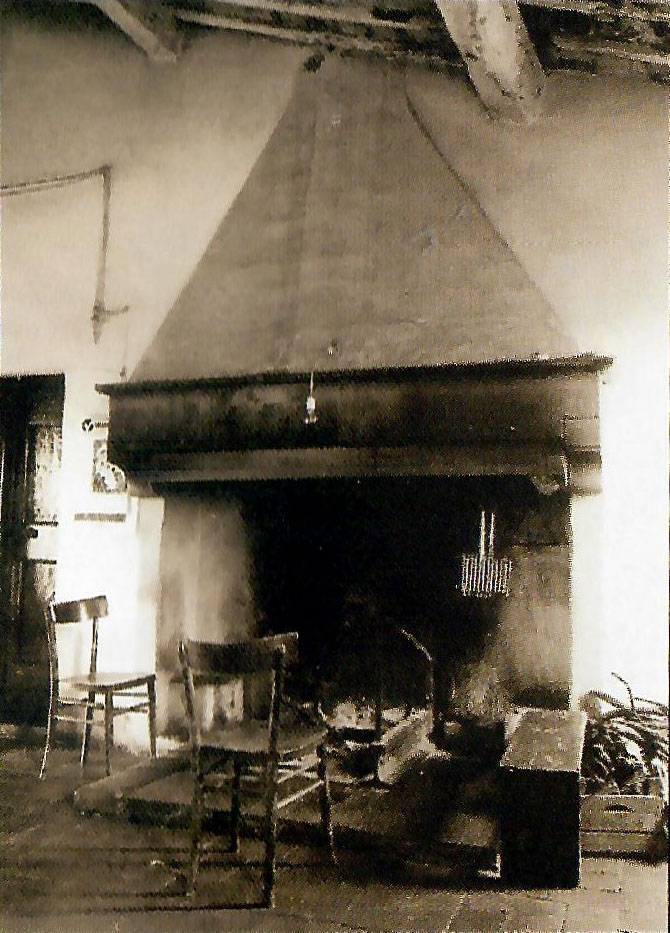
To this century we owe the expansion of some ‘open’ villages, such as Soppioro, perhaps named Casanuova at that time. Here, we find isolated houses or small clusters of houses, located near previous kilns, with earthen stables, a central hall with a hearth on the upper floor, surrounded by bedrooms, and sometimes a dovecote (as was the case, for example, with a certain Cristoforo di Piero, documented in 1468).
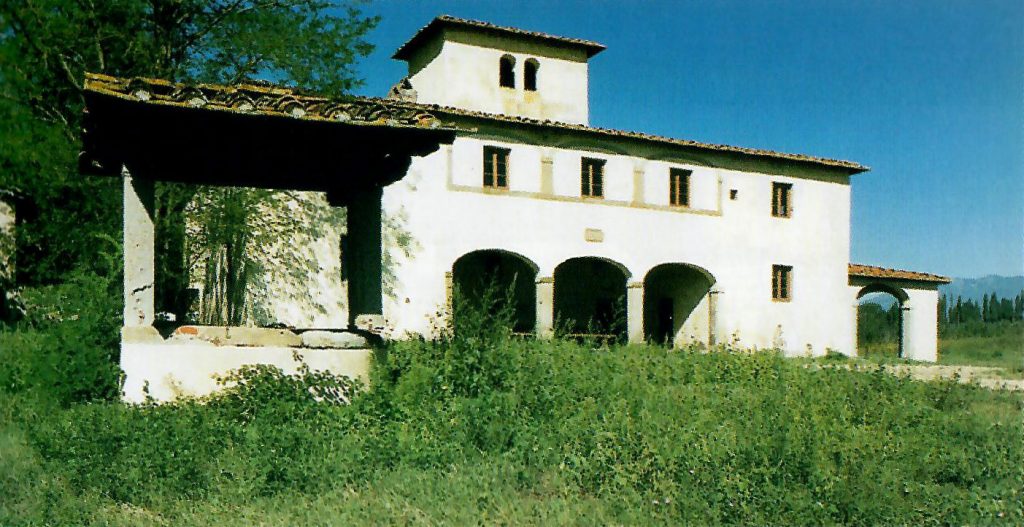
The agricultural buildings of the Isola estate of the Ginori family were soon rebuilt according to the new principles. Later, the old farmhouses of Casacce, Pianacci, and Rocca, on the Capponi estate in Monsoglio—narrow and irrational—were largely demolished at the beginning of the 19th century and rebuilt similar to the newly constructed ones (such as Beccafico, Casa Nuova, or Giuncaia). The latter model of farmhouse represents the first and most widespread synchronic variation, featuring a central internal staircase and a single central dovecote. Separate from the main building, but arranged around the courtyard, were the various outbuildings (such as the barn, pigsty, carriage house, or chicken coop).
From a typological point of view, one of the most ‘perfect’ examples (a true crystallographic parallelepiped under the light, defined by the dark ‘openings’ of the ground-floor and first-floor arcades and the sharp emergence of the dovecote) seems to be that of Casa Nuova or Giuncaia or Granchiaia, which may represent the relocation of the farmhouse from the Penna estate (formerly part of the castle grounds) to a more central area with abundant water, in line with Morozzi’s recommendations.
The farmhouse of Poggerello (now also part of the Monsoglio estate) differed from the Capponi’s renovations because it featured the second synchronic variation of the aforementioned typology: the double-tower dovecote, which was widespread in other municipalities of the Valdarno, such as Pian di Scò or Castelfranco.
Other interesting farmhouses from the period include those of Le Conia, Casuccia (rebuilt by Count Pierucci in the 1780s), Pozzo, Stiani (with a central dovecote), and Ricarri (with two dovecotes, later part of the Royal estate of Laterina, privately owned by Leopold II). The Stiani farmhouse, one of the first to be built, was commissioned by Giovanni Ginori in 1768. The Pozzo farmhouse is characterized by beautiful brick vaulted ceilings in a ribbed, cross pattern, forming distinctive four-pointed stars. Similar decorative features can also be found in four ground-floor rooms of the Il Bacco farmhouse, located along the old route of the Via Vecchia Aretina to the east of Laterina, near the bridge over the Bregine stream (a building possibly originally intended as an inn and expanded in the 19th century).