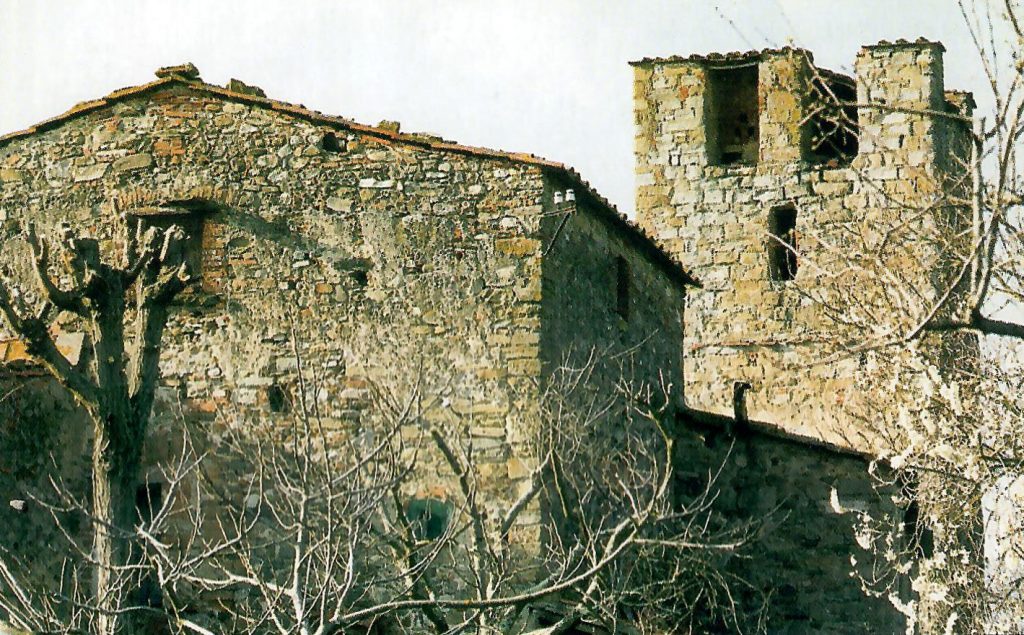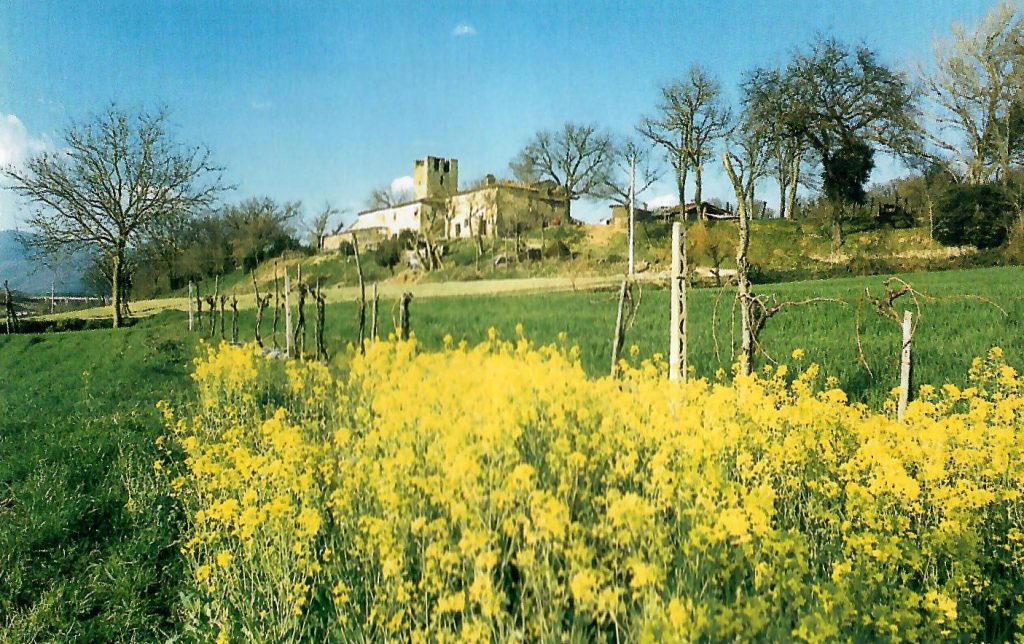



The name of Saints Hippolytus and Cassian in Campavena was dedicated to a small church within the walls of Laterina, but before 1100, this title for the parish was attributed to a late antique Roman farmhouse villa located outside the town in a marshy area. After losing the title, the former church was repurposed for agricultural use, as during the 17th and 18th centuries, the area was primarily characterized by cereal farming and livestock breeding. However, through the two mentioned road connections (to San Giustino and Ponte a Buriano), products from the local brickworks were also traded, which exploited the abundant clay deposits (evidenced by place names such as Latereto and ‘Laterino’ or ‘Laterini’, later evolving into Laterina, meaning “brickworks” or “tile kiln”).
In the 5th century, during the Barbarian invasions, it was destroyed and burned. Between the 4th and 5th centuries, the local early Christian diocese, like the others in Tuscia Annonaria (modern northern Tuscany), mirrored the structure of the Roman municipium.
After the Byzantine victory over the Goths, starting in 554, only a few churches were rebuilt, as the Byzantine Exarchate was soon overwhelmed by the Lombard hordes in 568. The Lombards built powerful defensive towers against the Byzantines (the so-called gardinghi) and reconstructed some churches, which became Arian, including the aforementioned late antique villa. This religious center was likely rebuilt in the 8th century, with a basilica layout featuring three naves and three apses (now destroyed).
However, the massive bell tower is still preserved. Some elements reveal a close connection with Lombard construction techniques, particularly the rough and massive surviving columns (between the central nave and the left one), with cylindrical shafts made of broken stone rubble and plastered, similar, for example, to those found in the excavations of the second sacred building at Gropina.
During this last century and the following one, the area between Le Pievi and Monsoglio became, perhaps, a royal Carolingian hunting reserve. Around the 10th-11th century, the flat area between the Arno River (which, after the strait of Rondine, had an increasingly uncertain and shifting course), the Bregine and Oreno streams, and the Campavena ditch on one side (right-bank tributaries), and the Rimaggio, Ganascione, and Acetola ditches on the other, gradually became more and more marshy. However, this did not diminish its importance as a hunting area, providing prized game associated with water and wetlands.