


The toponym Chiusuri, a location situated between Casanuova and the Agna stream, may perhaps be interpreted in the “military” sense of a barricade or blockade (derived from the Latin classis, meaning division or separation), a name recurring during the Byzantine-Lombard wars to indicate a place opposite, along the limes (boundary), to the loca signata, the Byzantine outposts built against the Lombards. However, it is also possible that, as may be the case here, the toponym Chiuso or Chiasso referred to an enclosed piece of land, specifically a closed or walled area, often royal or lordly in nature: the terrae cum clausura, characteristic of a Lombard land system.
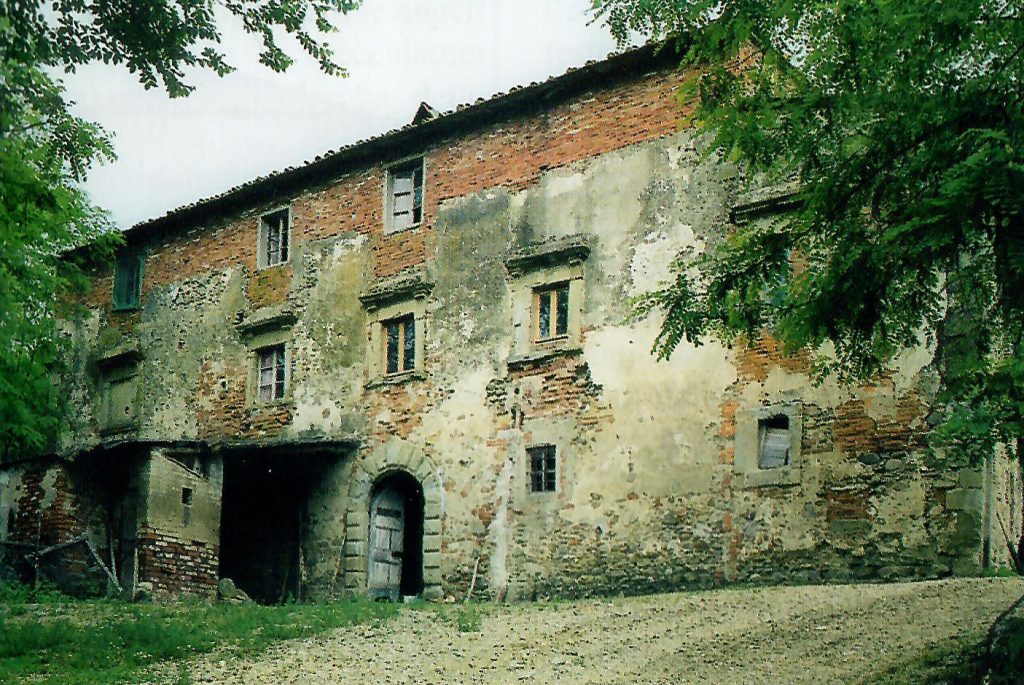
In this location, which was inhabited in prehistoric, Etruscan, and Roman times (as evidenced by various archaeological finds), a gentleman’s house with a rectangular plan was built between the 16th and 17th centuries. The front, facing west, features five axes of Doric-arched windows on the first floor, while the ground floor is marked by a central, arched portal surrounded by a fan of flattened stones that culminates in a flamed extrados, in alignment with the keystone of the arch. On either side, there are four small rectangular windows. The large plastered surface is topped by a smooth rusticated stonework along the corner pilasters. Unfortunately, more recent extensions, dating back to when the building was converted into a farmhouse (including a canopy in front and an additional floor), have somewhat altered the original configuration.
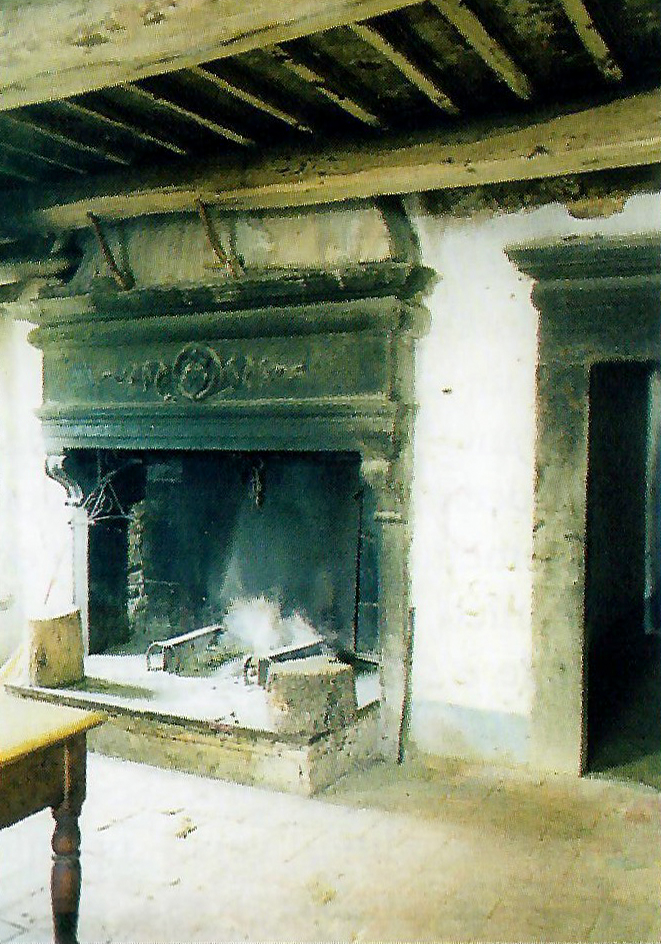
The northern facade has two axes of similar windows, while the southern side is characterized by a loggia with three openings (now partially bricked up), whose original roof rested on four Doric columns made of sandstone and on brackets, also in stone. Below the loggia, there is a second portal similar to the previous one. Inside, the entrance hall still preserves a beautiful stone fireplace, with a cornice supported by volute brackets and adorned, in the frieze, with a noble heraldic coat of arms in bas-relief, surrounded by a garland of leaves and fluttering ribbons. The mouldings of the cornice are repeated in the elegant yet restrained portals.
The building originally belonged to the Guinigi family, then to the Rodi and Pampaloni families of Castiglion Fibocchi, and finally, since 1966, it has been owned by the Giangeri family.